
HIGHSCHOOL WOODWORK PROJECTS 2017-2019
I took woodwork at school from year 7 to year 12 and was the only girl in Tasmania to do so over two years. Over those years I had the opportunity to work on a plethora of amazing projects, and I learned a lot about the skill of working in timber. I found these projects to be a lot more fulfilling than what I've been able to design since being in uni as I was designing in a system where I was free to explore my own design ideas and style rather than being beholden to the agendas of "studio styles".
My favourite thing about these projects was that you get to experience the full design process and remain fully in charge of the research, design, iteration and construction of the project. The feeling of making your ideas tangible is so amazing, and it's so uniquely fulfilling to develop a physical skill.
This page shows my projects from year 8 to year 11. My year 7 work is not worth showing and my year 12 kinetic structures are included in separate pages on the site.
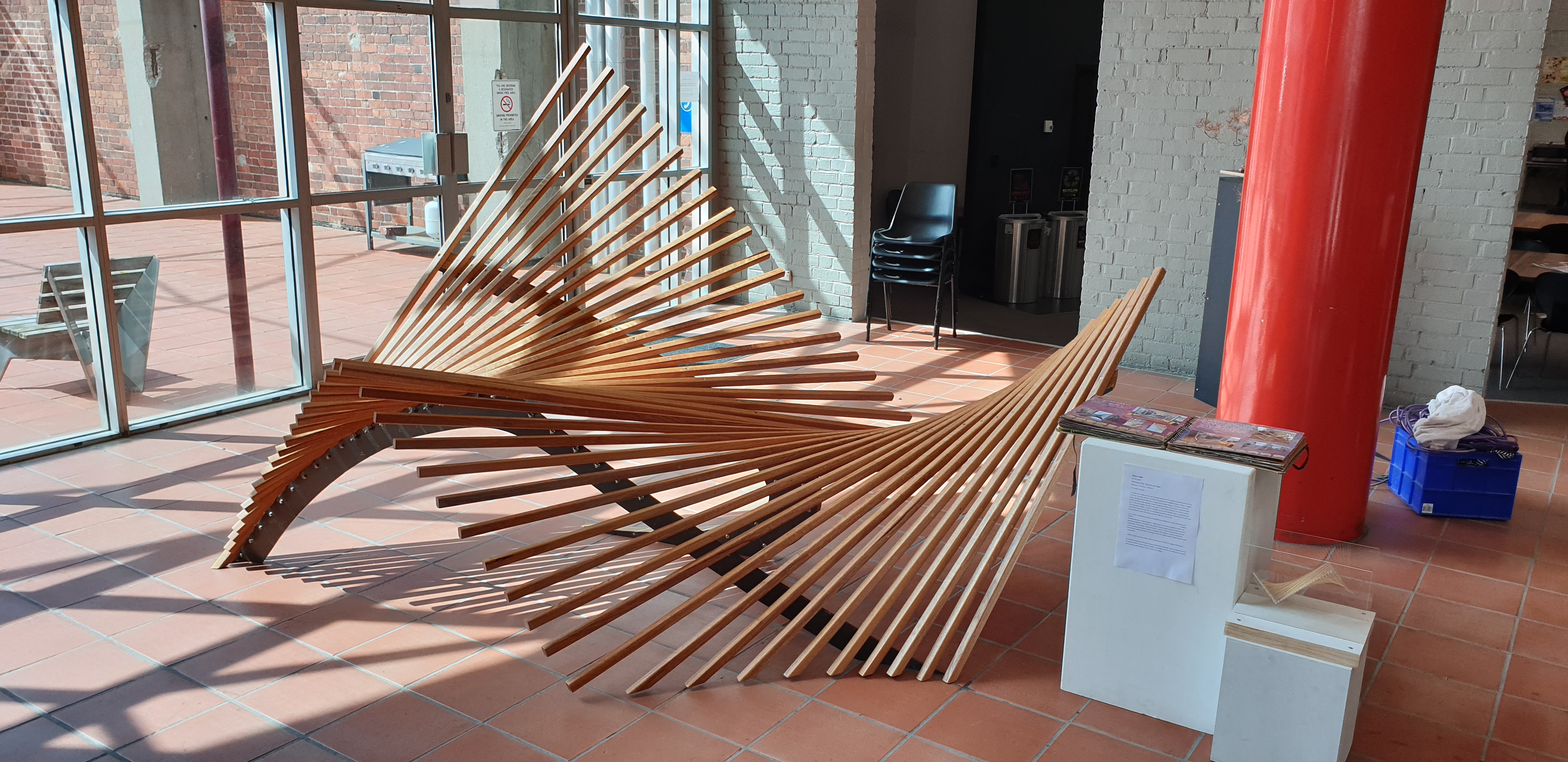
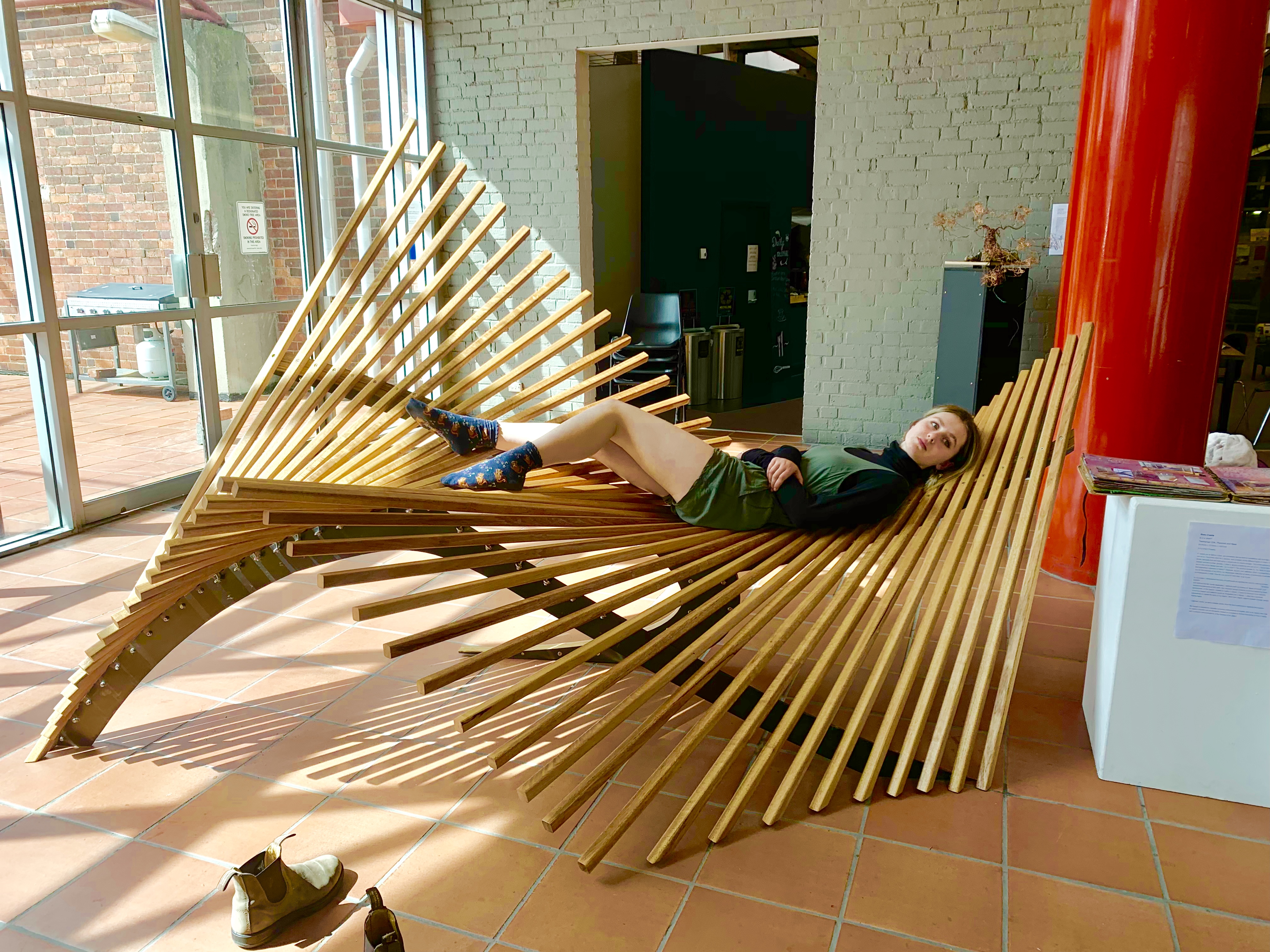
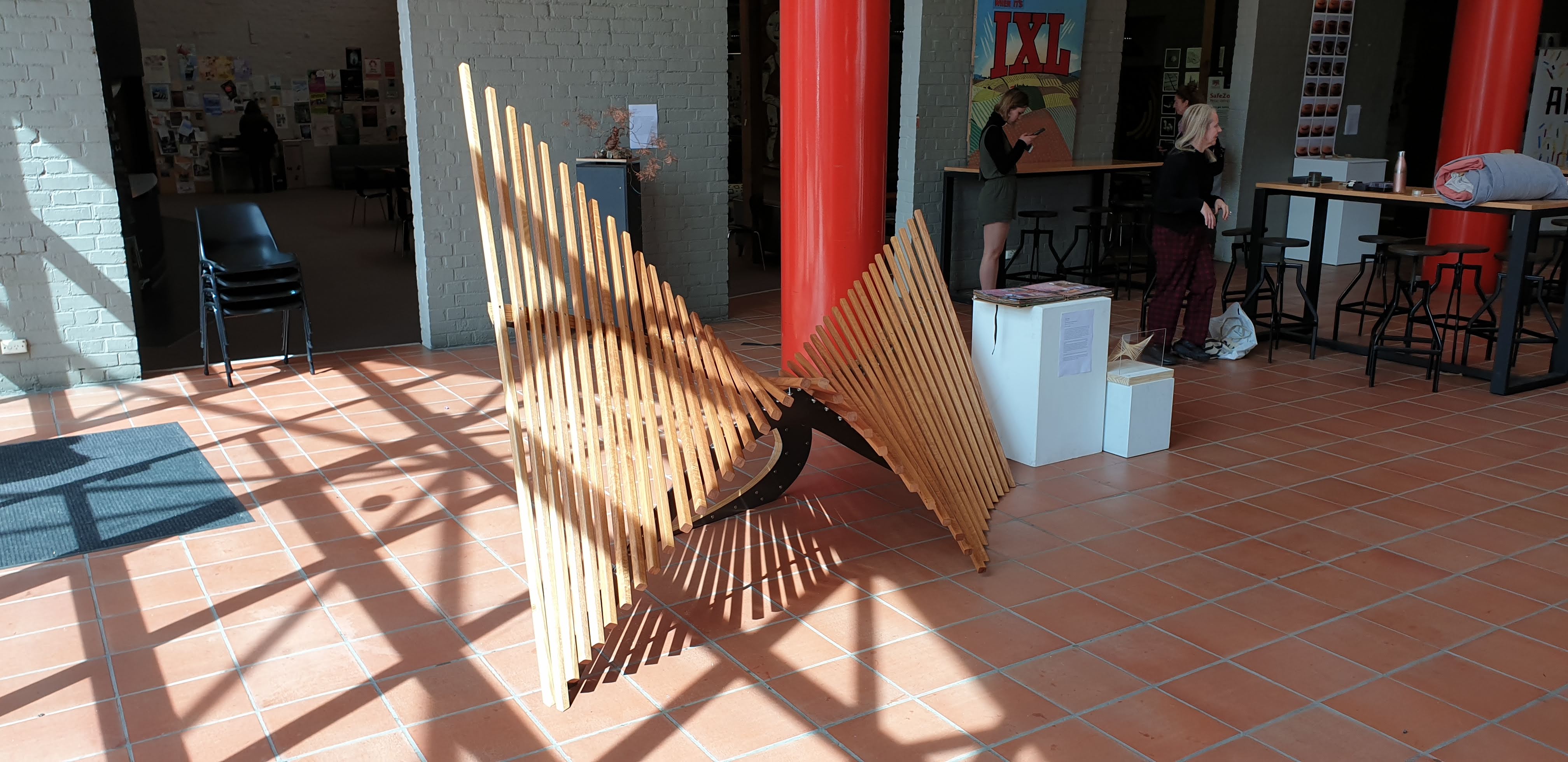
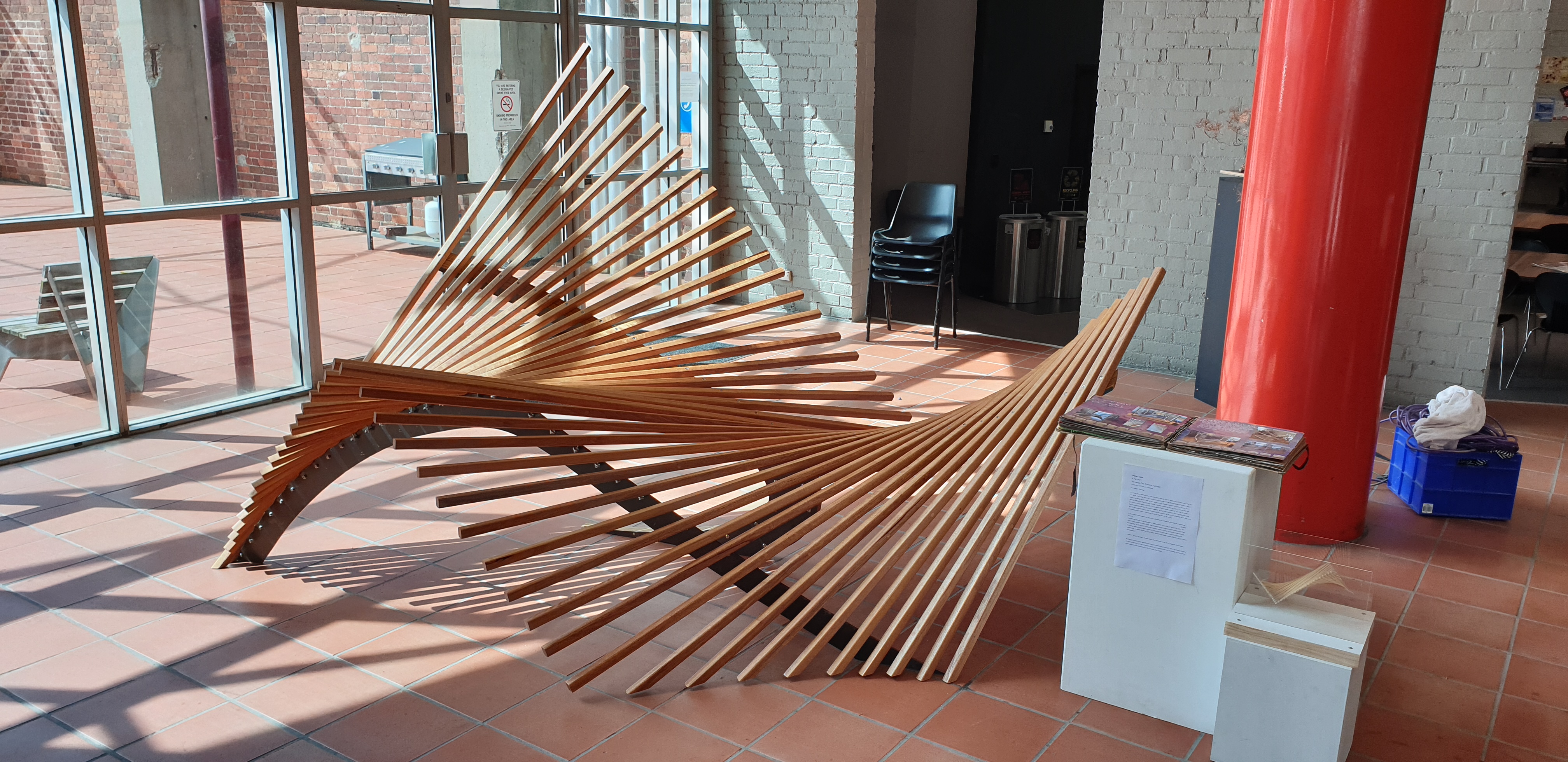
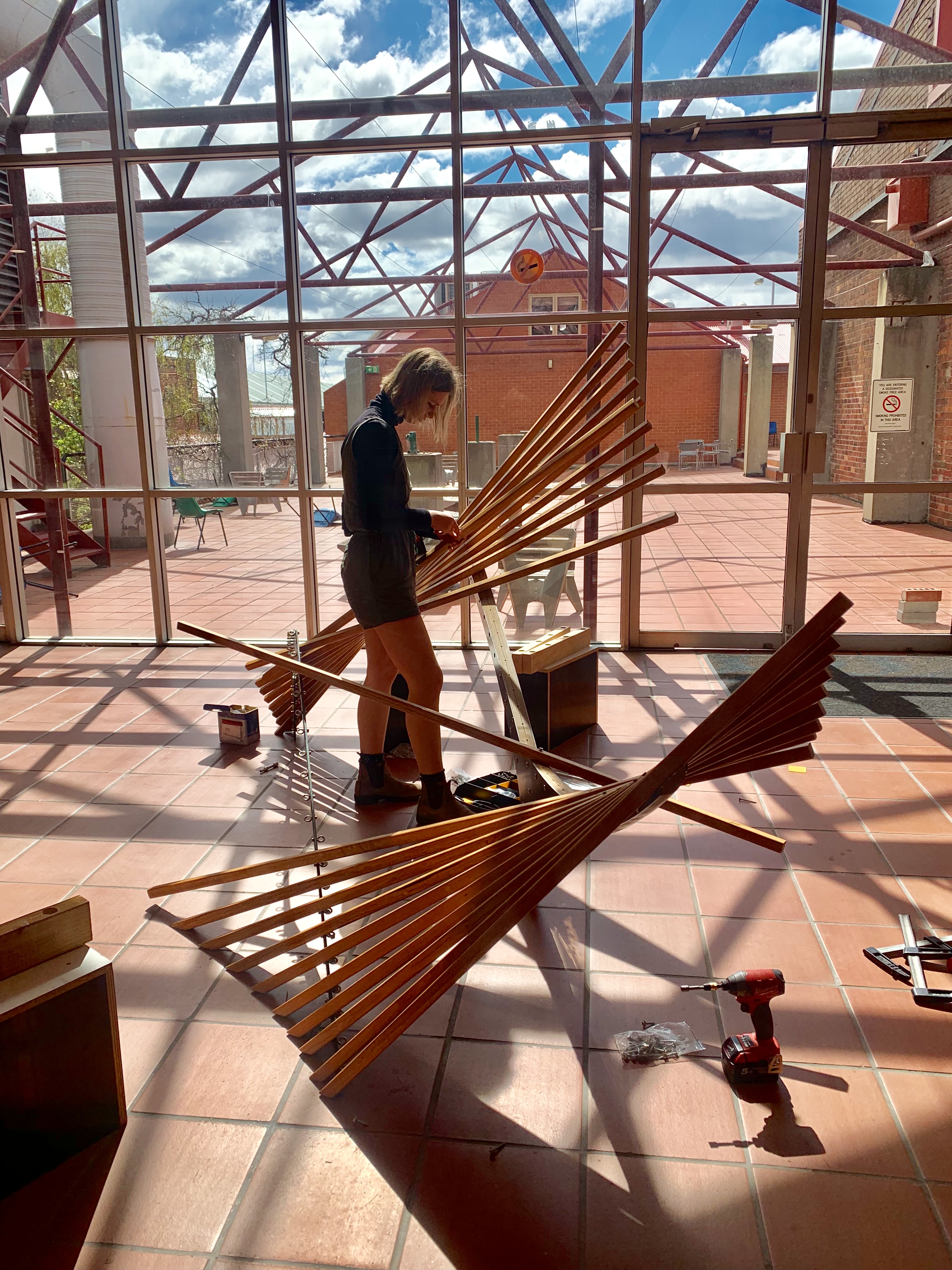
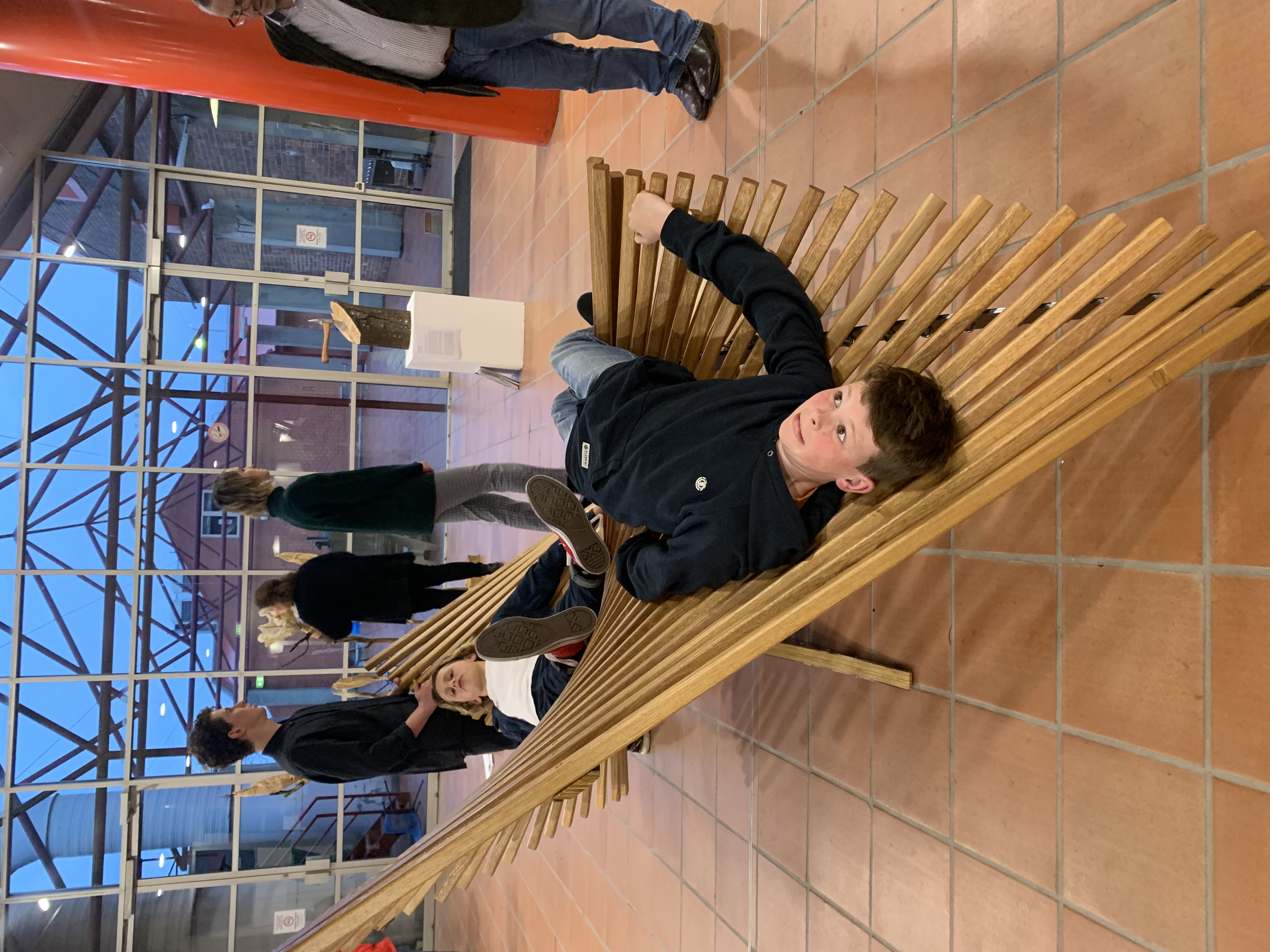
'Is it a chair?' is a piece of furniture constructed using Tassie Oak lengths and a laser-cut steel base, designed for UTAS subject 'Object Design' while I was in year 11. This is my favourite thing I've ever designed because it was the first project I worked on where I properly started to develop my own style and ideas. I'd done a few other projects at this stage, and this one was the first time I properly set out a design project, researching and iterating my ideas. It was the first project that taught me how to compromise, realising that the design wasn't going to sit on one leg as I had hoped but that I needed a second leg, which I felt compromised the "lightness" of the design. I wrote in my design journal at the time that,
"I felt my design, once formulated, had wickedly cheated the system since it was highly organic but entirely constructed from straight beams of wood at different angles. "I'll be able to toss this together in a lesson", I thought as I zoomed in and out of my design on SketchUp. Many hours of resolving (and sanding) later, I can safely say I was an idiot. I learned that design isn't a linear process as I had naively envisioned. Physically creating a theoretical idea from inside your head necessitates many different forms of innovation, compromise, backtracking and prototyping in order to get it right. I feel I still haven't fully perfected my design."
In my subject reflection for the project I wrote about the lack of women in my cohort,
"I added a guideline of using only female designers in precedents and design inspiration, to learn more about underappreciated people working in the design field. By the start of this year I had never had a female woodwork teacher, studied a female designer, or heard of notable women working with wood. Fewer and fewer girls each year elected to study woodwork, which I felt had nothing to do with lack of proficiency but was due to poor recognition of women working in design."
This project was the first time that I began to derive my stylistic ideas from mathematical geometry, which has become a common thread across most of my subsequent projects.
Through this project I taught myself digital modelling (on SketchUp) and used parameters to create the shape. It's funny to me now how easily I could create this project now, but when I did the modelling then it took me months to work everything out. The shape itself was not technically very difficult to create from timber, so it was the first project where I was able to do large amounts of the machine work myself rather than having to rely on the woodwork technicians to do it for me. It was hugely rewarding creating something that was so dominant in the space, but that people could physically interact with and were intrigued by.
PROTOTYPING AND MODELMAKING.
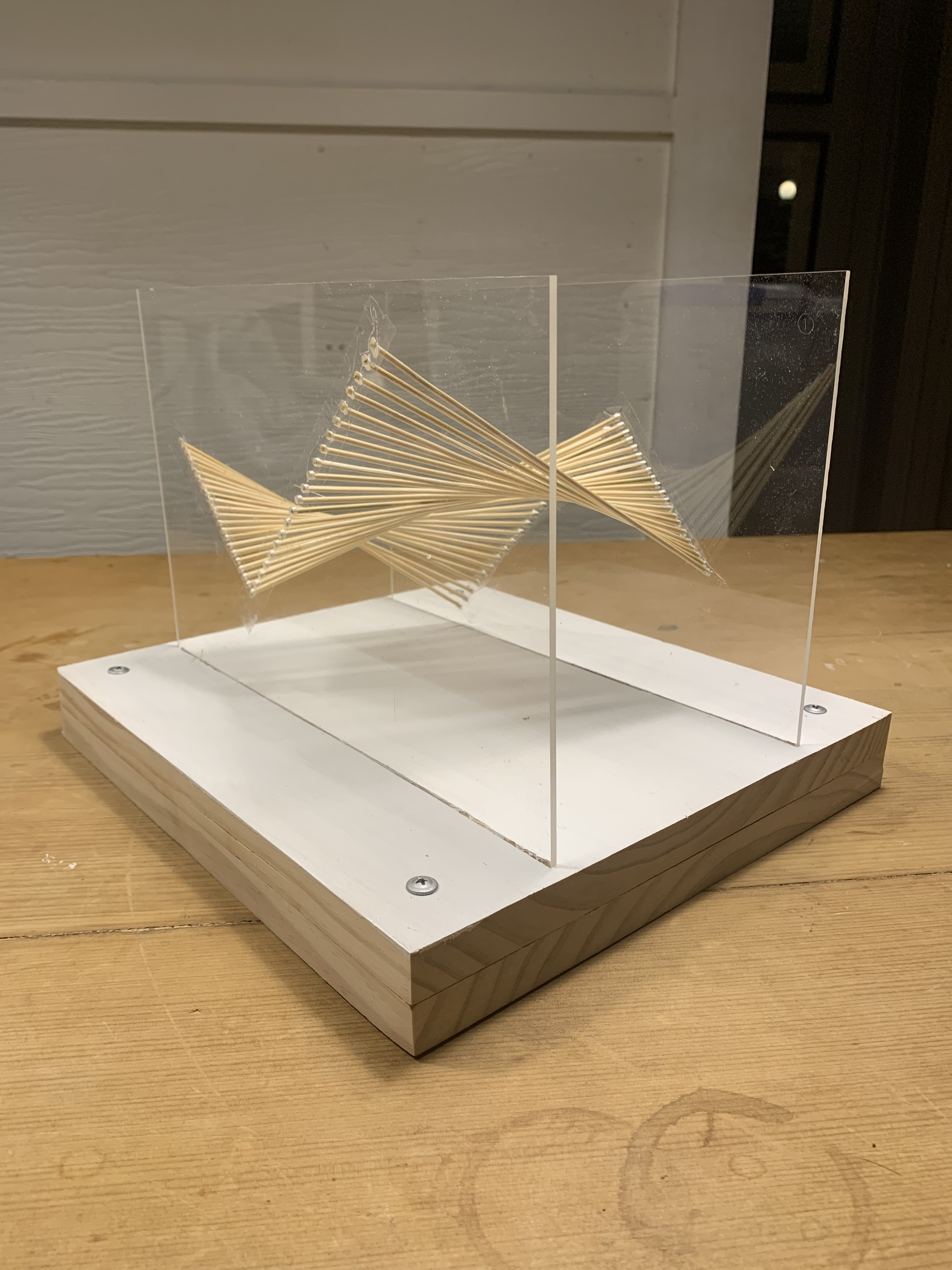
These are two of the four models I constructed for my "Is it a chair?" project. I learned a lot about how important it is to iterate and physically see my project as a component of the design process. The image from the bottom left is my SketchUp render of my model.
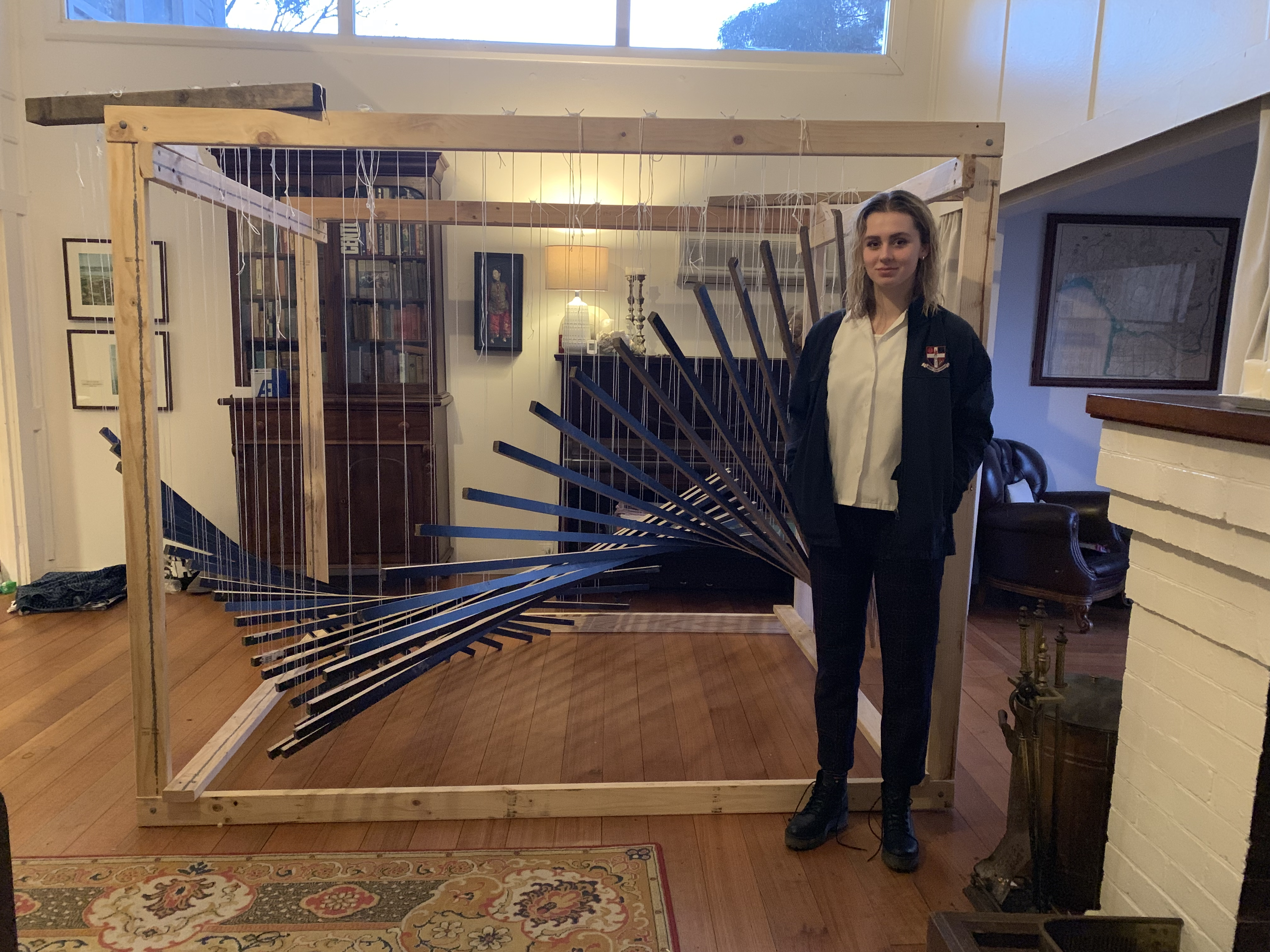
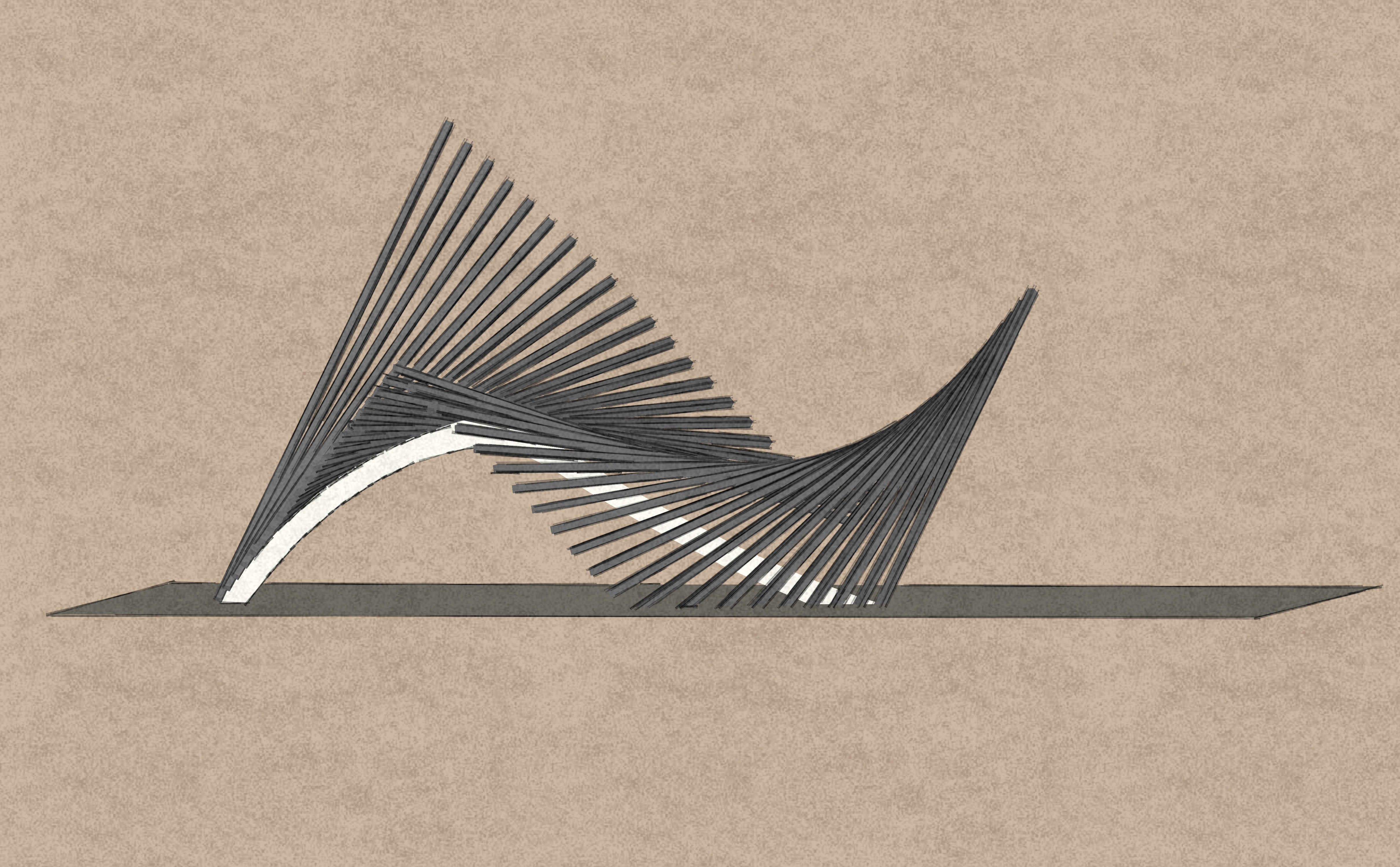
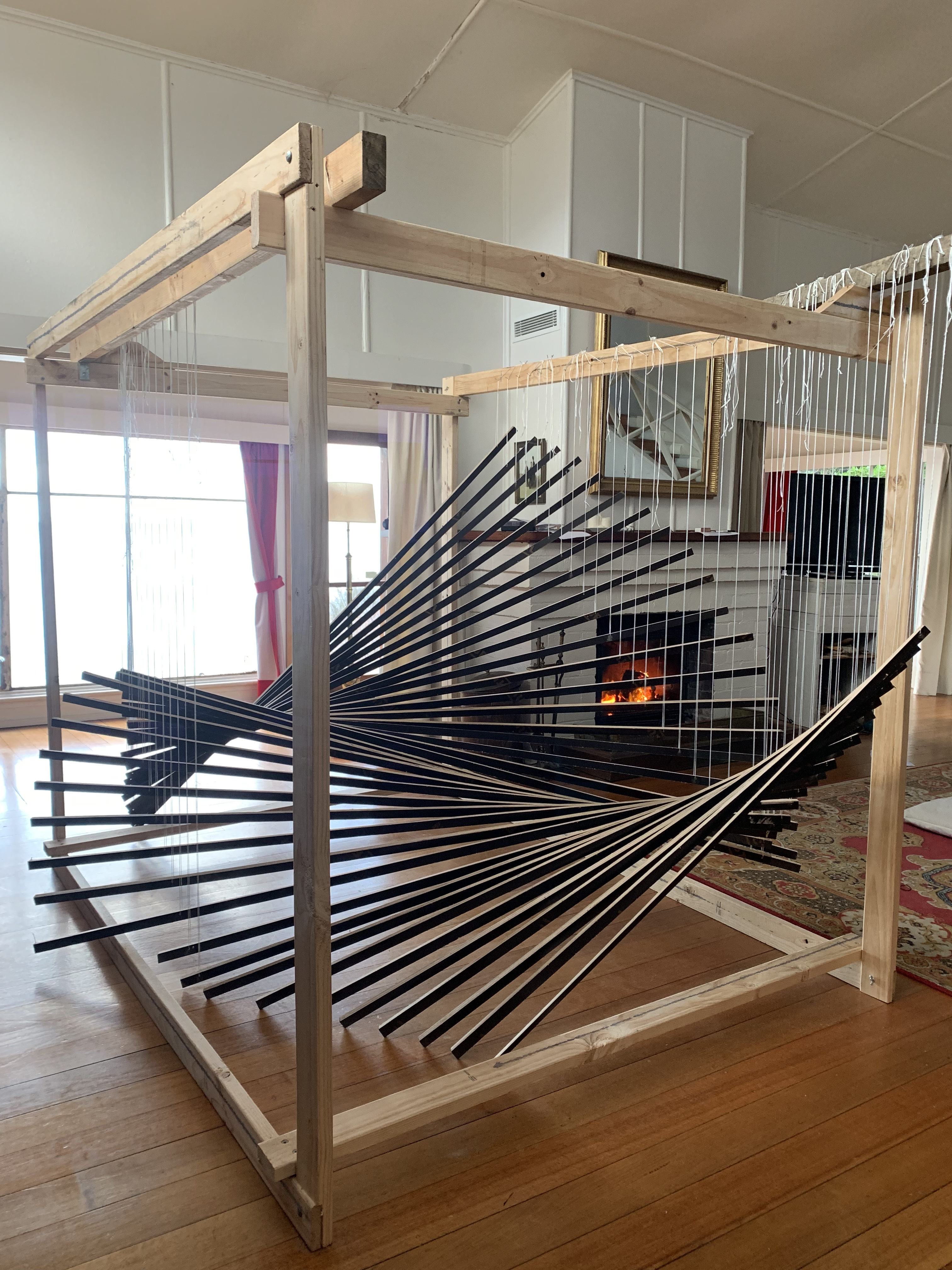
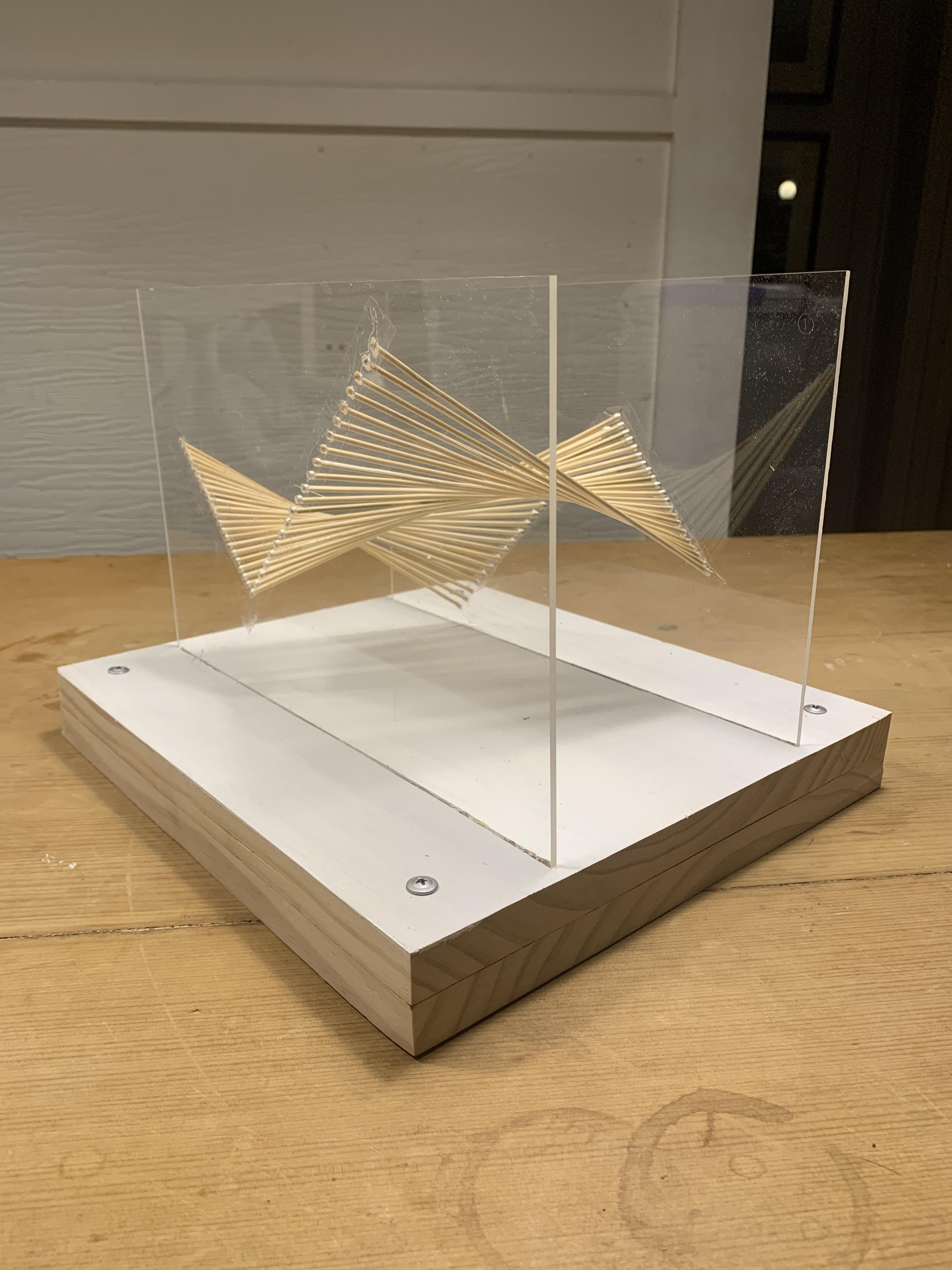
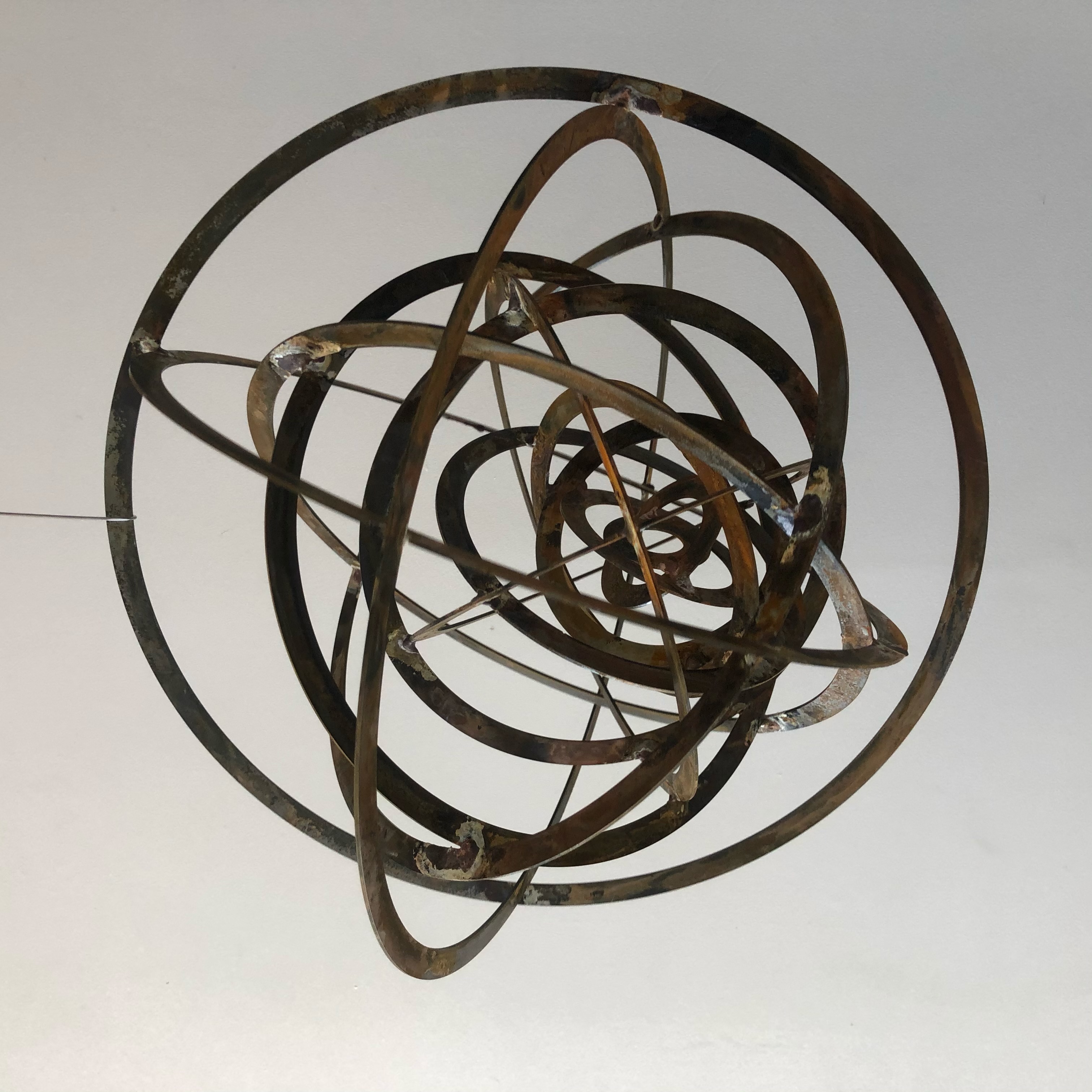
A two-week project in year 11 art encouraged us to recreate an artwork from an artist that we liked, trying to be as faithful to the original work as possible. I chose to try and remake Alexander Rodchenko's Spatial construction number 9, which was the first time I ever used metal in one of my designs. I have always had a deep interest in Constructivism and many of my projects start with precedents from constructivist artists. I really like the use of strong geometry in their designs and I find the ethos of "mass produced art" to be really interesting, especially in the new era of AI.
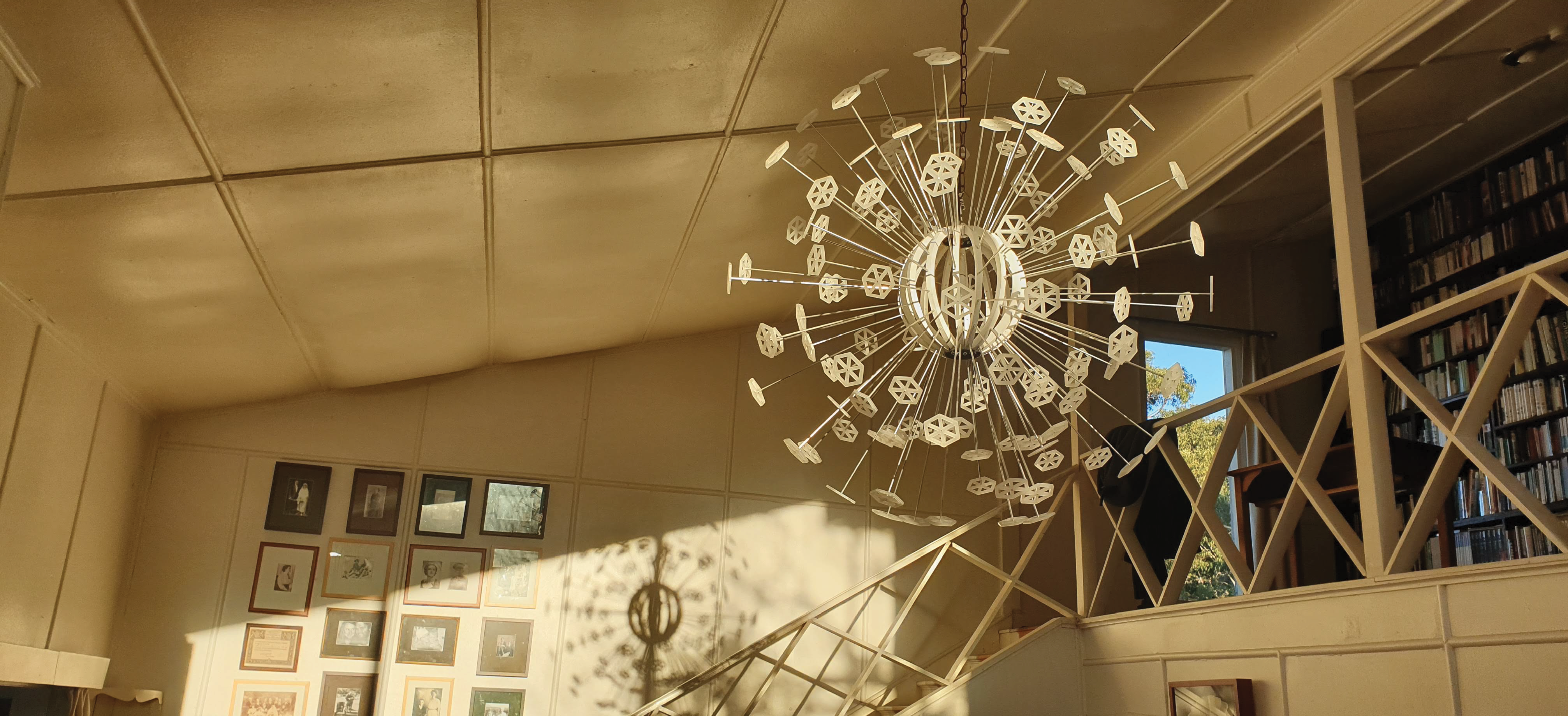
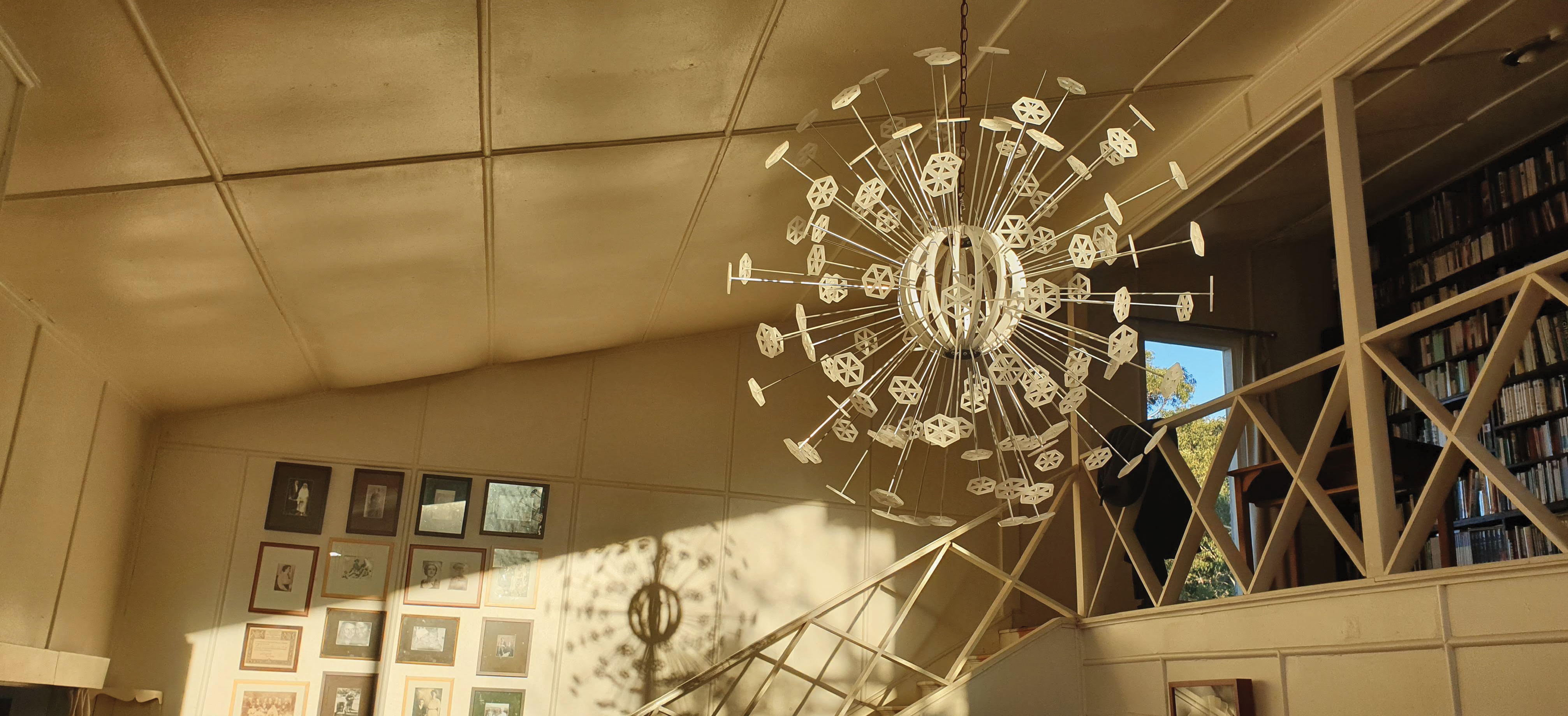
'SEA LIGHT', 2018
"Sea Light" is a lightshade that I made for my parents in year 10. It is constructed from lasercut plywood, aluminum rods and lasercut acrylic. This was my first major design, and it's funny looking back on it because I designed it when I really wanted to be inspired by organic design. I did a bit of precedent research and loved the idea of biophilic design, and wanted to design something pretty.
The reason I find this funny is because in terms of hierarchy and geometry it's still just as inspired by strong geometry and mathematical shapes as any of my later work, I just took the long way around to get there.
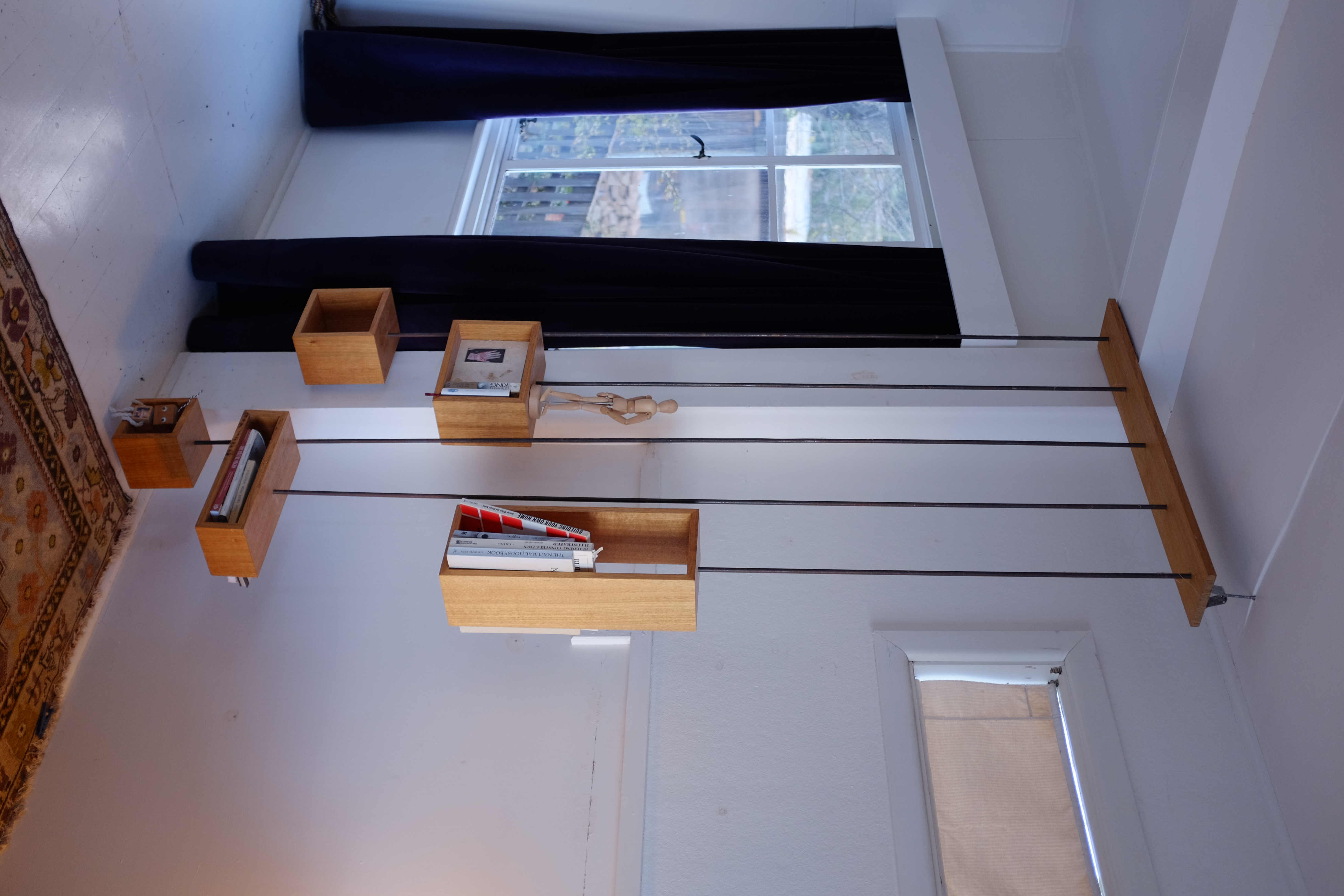
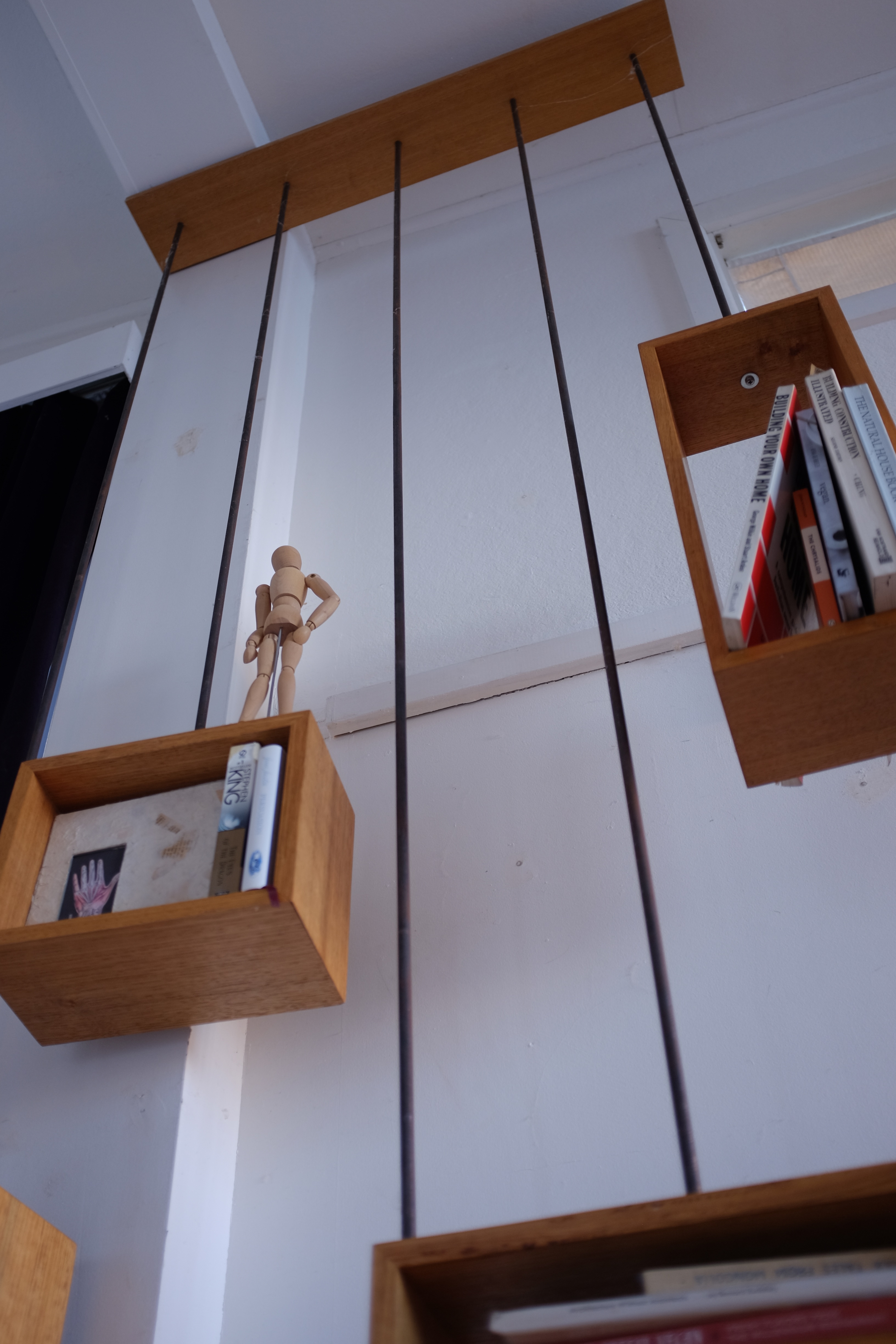
'SHELF 2', 2018
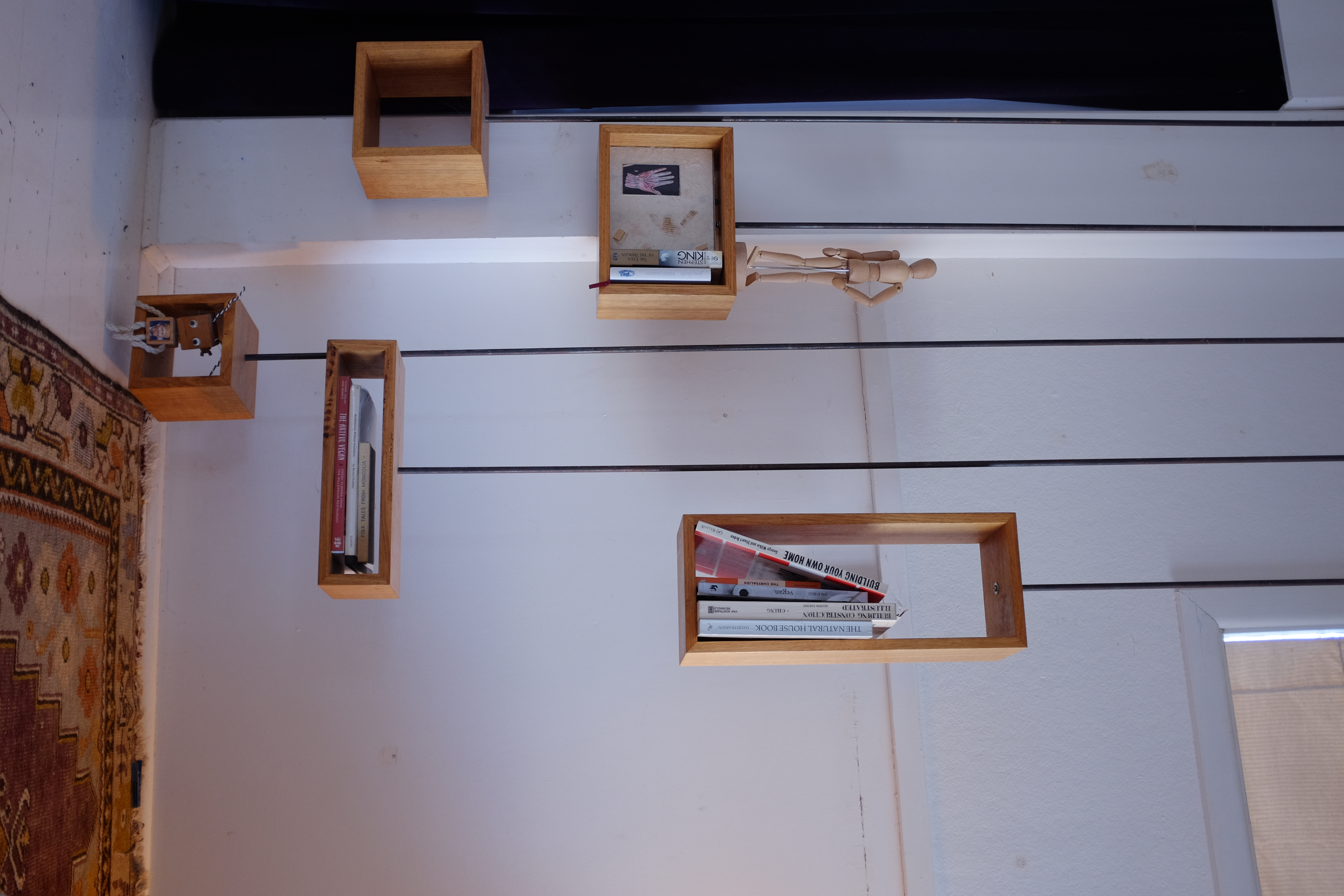
"Shelf 2" was a two week project (which means four hours because we only had two hours of class time per week). We only had 20 minutes design time so there was no precedent research, and the idea was that we learned how to do a design task quickly. I really like this design I think it's really striking even though the shelves are the least practical size possible for using the shelf for anything.
The shelf is constructed from Tassie Oak and steel rods.
'SHELF 1' 2017
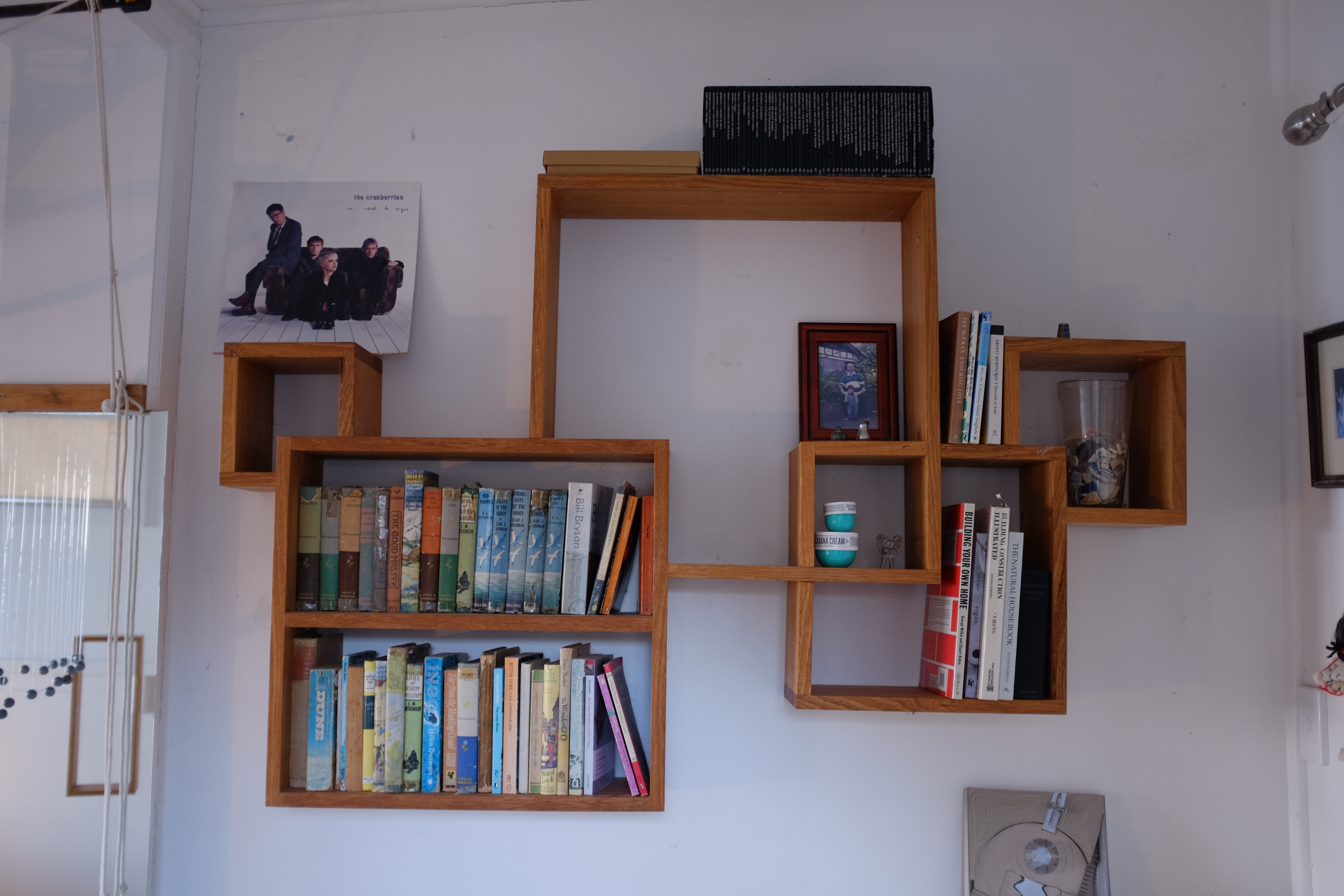
This was my final project for year 9 woodwork, where I created a bookshelf for my room. Looking back on this project, I was very constrained by the role that I thought a shelf should perform and despite playing a bit with conventional geometry I think now it looks quite naff and pinteresty. Through this project I learned a lot about how to use the machinery and how the design process worked.
The shelf is made from Tassie Oak and is designed to be wall mounted.